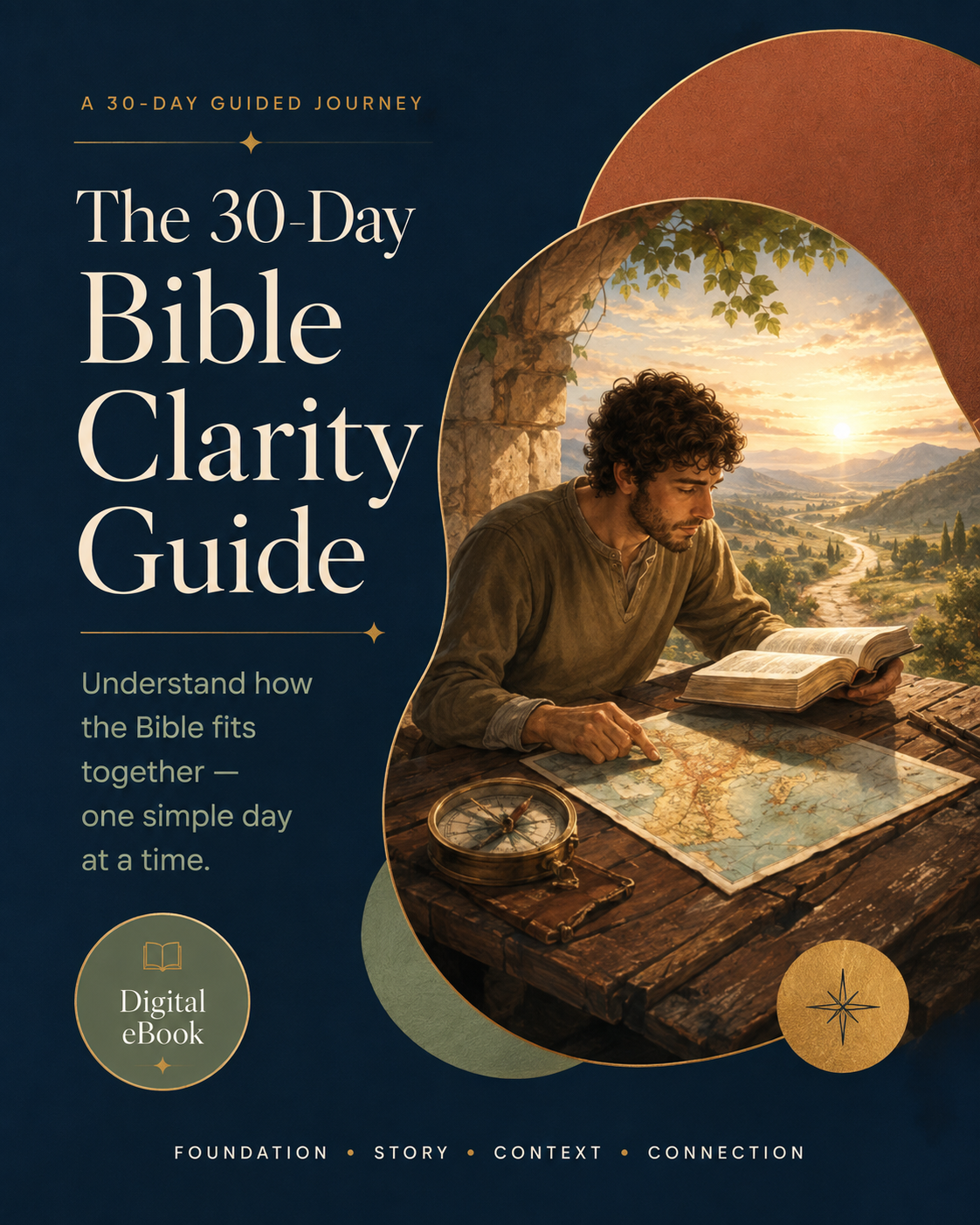
If names, books, and stories have always felt disconnected, the problem may not be how much you read. It may be that nobody ever showed you the map first.
See the 6 reasons ↓
You open the Bible with good intentions. You recognize some names. You have heard the stories. But once you move beyond the passages you already know, everything can start to feel disconnected.
“Where does Abraham fit in the bigger story?”
“Why does Moses matter so much later?”
“Where do the prophets fit between David and Jesus?”
“Why do Paul's letters suddenly appear after Acts?”
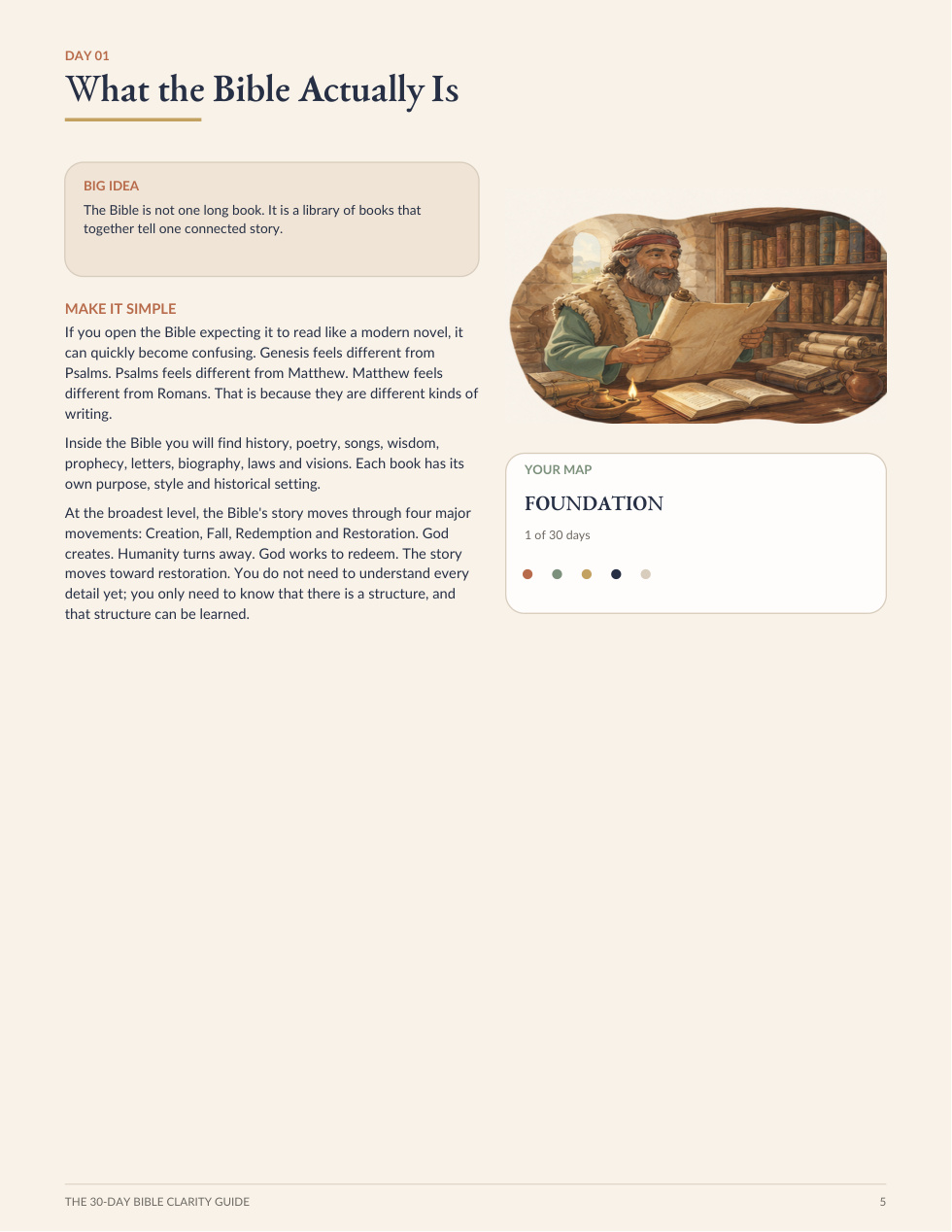
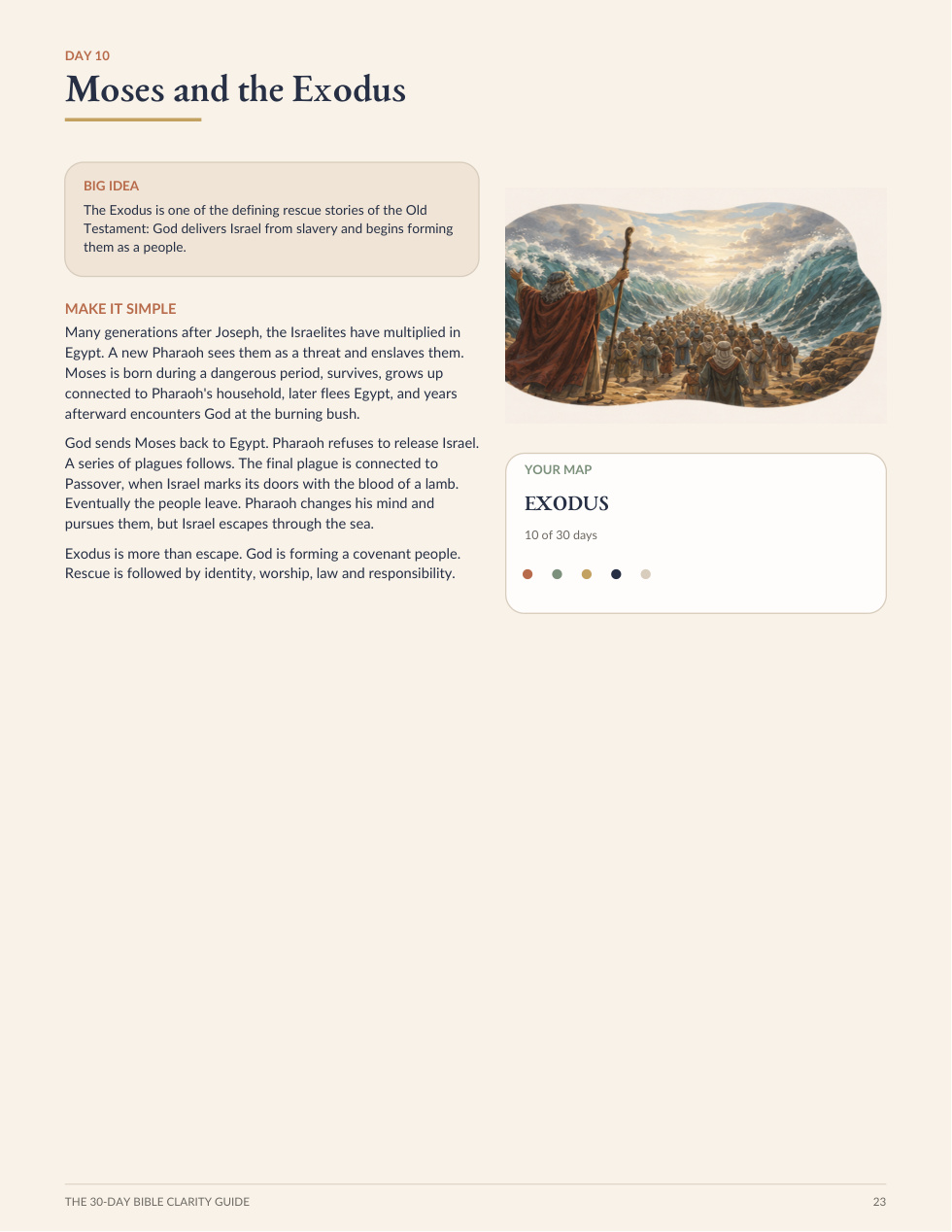
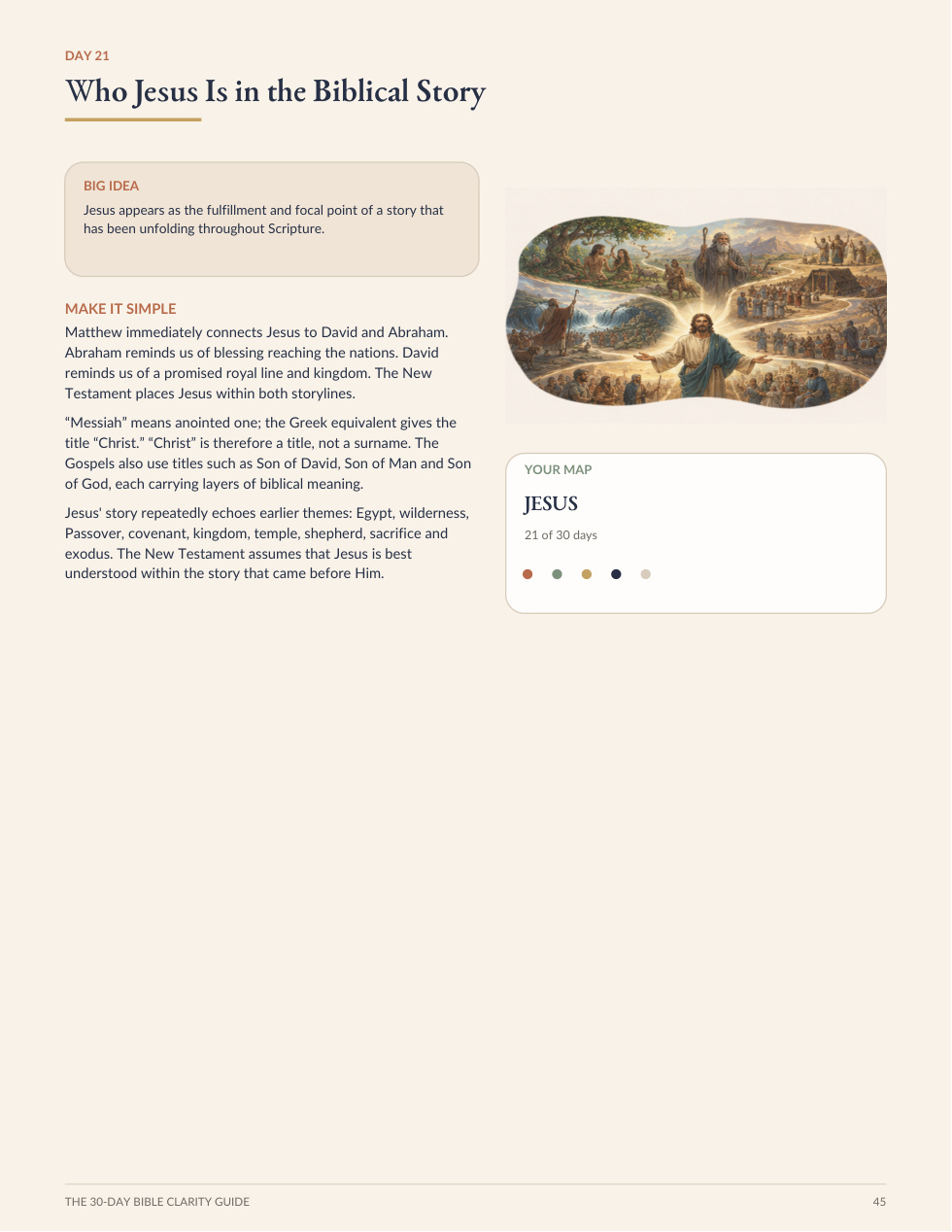
Real pages from the guide — not stock mockups or mystery content.

DAY 1 — The Bible as a connected library

DAY 10 — Moses and the Exodus

DAY 21 — Jesus in the biblical story
A guided path from “I know the pieces” to “I can see how they connect.”

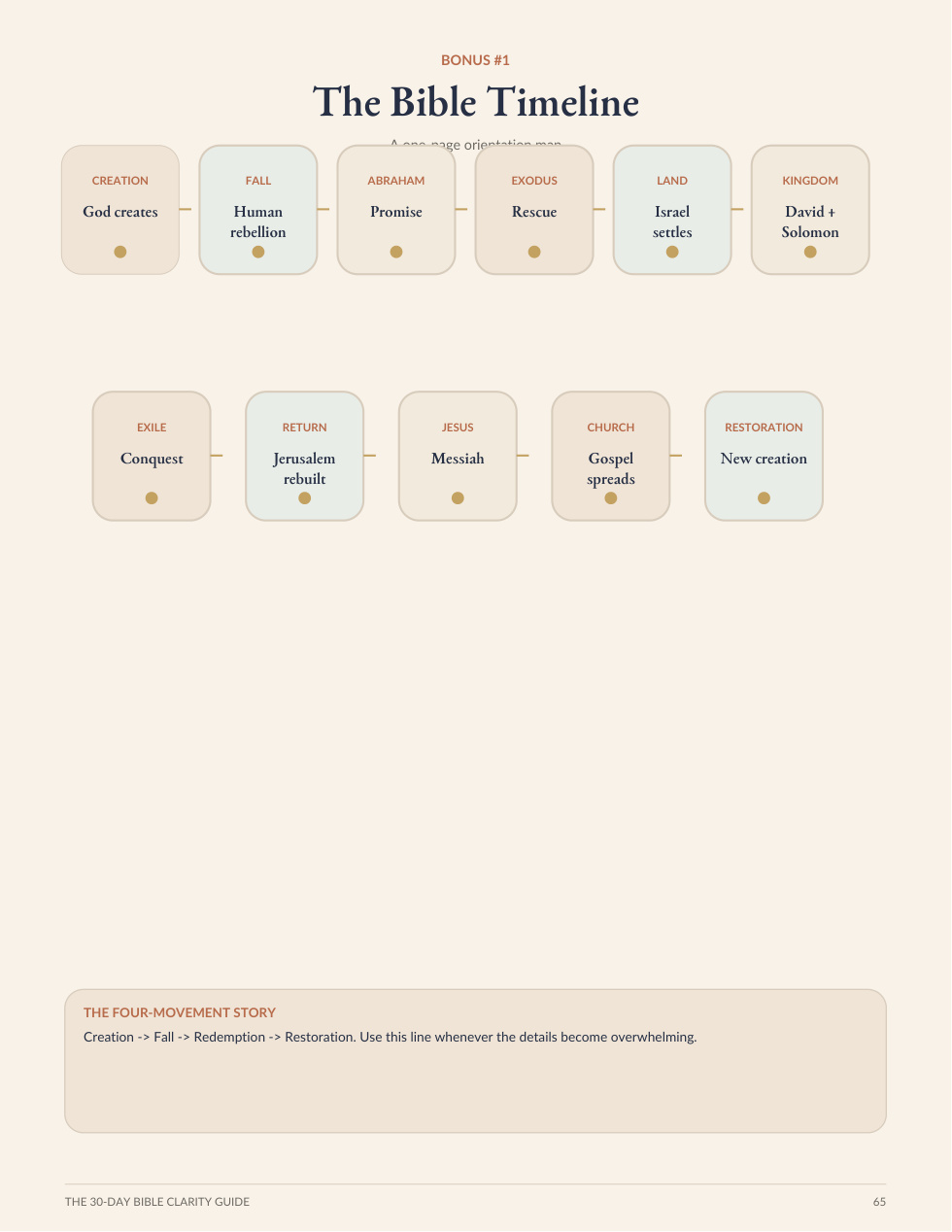
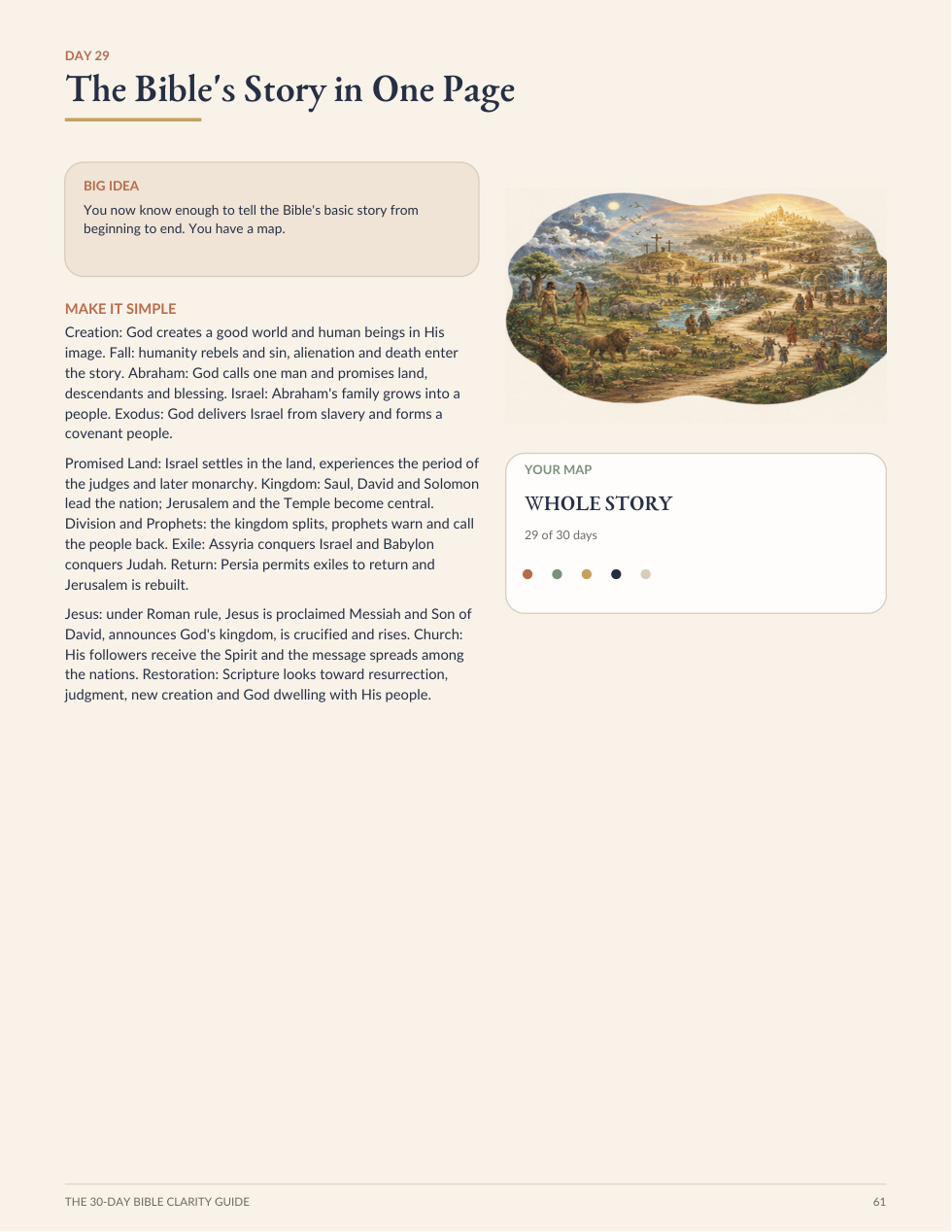
Instead of treating the Bible like dozens of unrelated stories, you learn the broad road first: Creation, Fall, Abraham, Exodus, Kingdom, Exile, Jesus, Church, and Restoration.
Once the road exists in your mind, new names and events have somewhere to go.

Abraham is no longer “the man with the stars.” Moses is not simply “the Red Sea story.” David is not just Goliath. Paul does not appear out of nowhere.
You begin seeing where each person belongs — and why later biblical writers keep referring back to them.

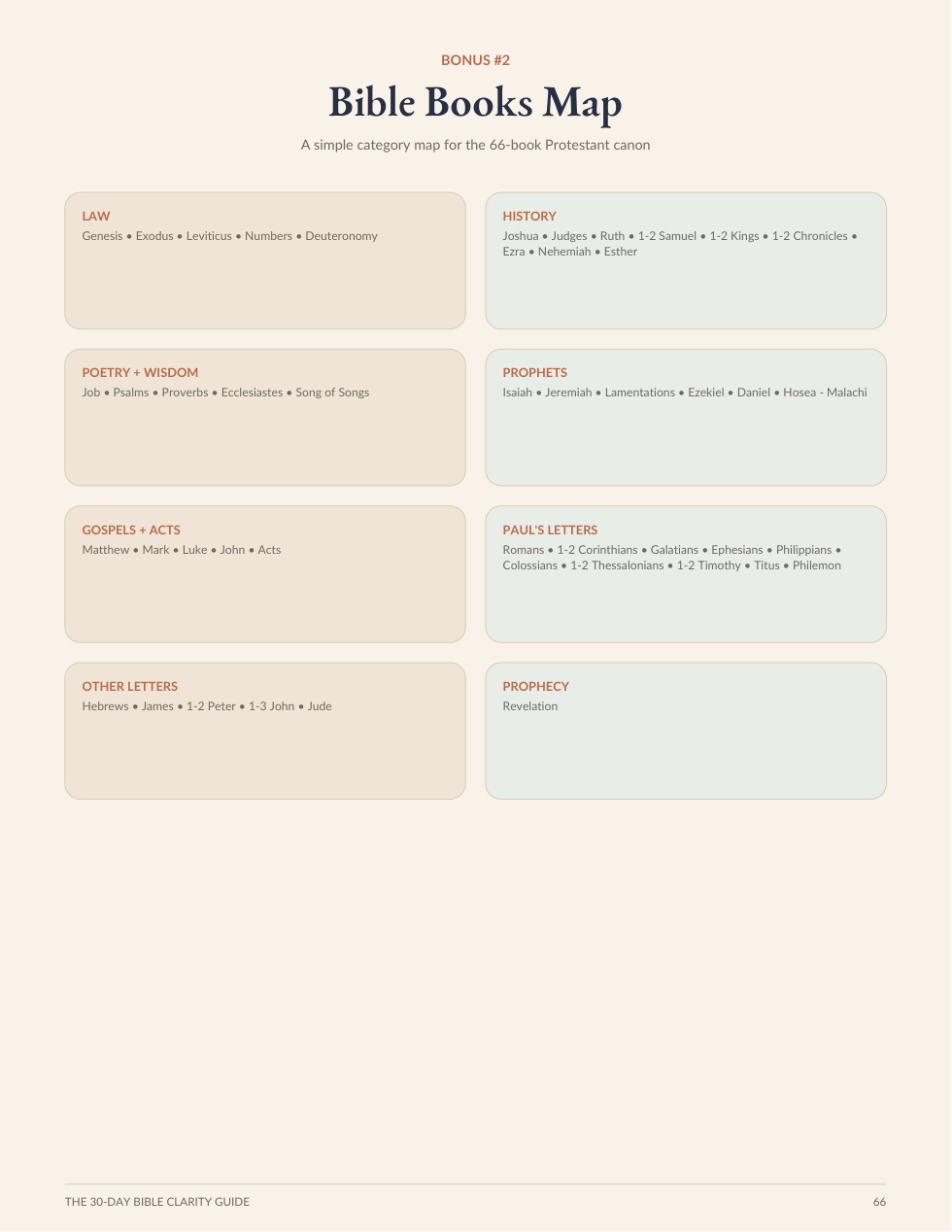
History, poetry, prophecy, Gospels, letters, apocalyptic writing — they are not supposed to be read exactly the same way.
When you know what kind of book you are opening and where it sits in the story, confusion drops before you even start reading.

Abraham, Passover, David, exile, kingdom, sacrifice, covenant — the New Testament is full of ideas with a history behind them.
When you know that history, words like “Messiah,” “Son of David,” and “Passover” carry far more meaning.
You do not need a theology degree or an hour-long study session. Each day focuses on one clear idea, a short explanation, one connection, a Scripture reading, and a reflection.
The goal is simple: understand one thing better today than you did yesterday.

The real value is not memorizing thirty lessons. It is learning how to orient yourself whenever you open Scripture.
That means future Bible reading has a structure instead of feeling like starting from zero again.
Every day follows the same simple learning rhythm.
“You do not need to understand everything before you begin. You need a map that helps you keep moving.”
Creation. Abraham. Exodus. David. Prophets. Exile. Jesus. Church. Revelation.
They stop feeling like isolated chapters and become landmarks on the same road.
Explore the Guide →
One day. One idea. A few focused minutes.
Start the day with one idea and a short Scripture reading.
Short enough to fit into the middle of a real day.
Read, reflect, and add one more landmark to your mental map.
Go through the guide and start building the map. If you decide it is not a good fit for you, your purchase is covered by the product's 30-day refund policy.
See the Guide →A closer look at the pages, visuals, and study tools included in the guide.
Yes. The guide was built to give beginners a clear framework before expecting them to understand every detail.
No. It uses a broadly Christian, beginner-friendly approach focused on biblical structure, context, and the larger storyline. It uses the 66-book Protestant canon as its organizing framework.
No. It is a digital PDF delivered through Gumroad, so you can access it immediately after purchase.
It was designed for a short, focused study rhythm. Most days can be worked through in a few minutes, plus whatever time you choose to spend reading the recommended Scripture.
No. You can use the Bible translation you already prefer.
Yes, for your personal use. You can also read it digitally.
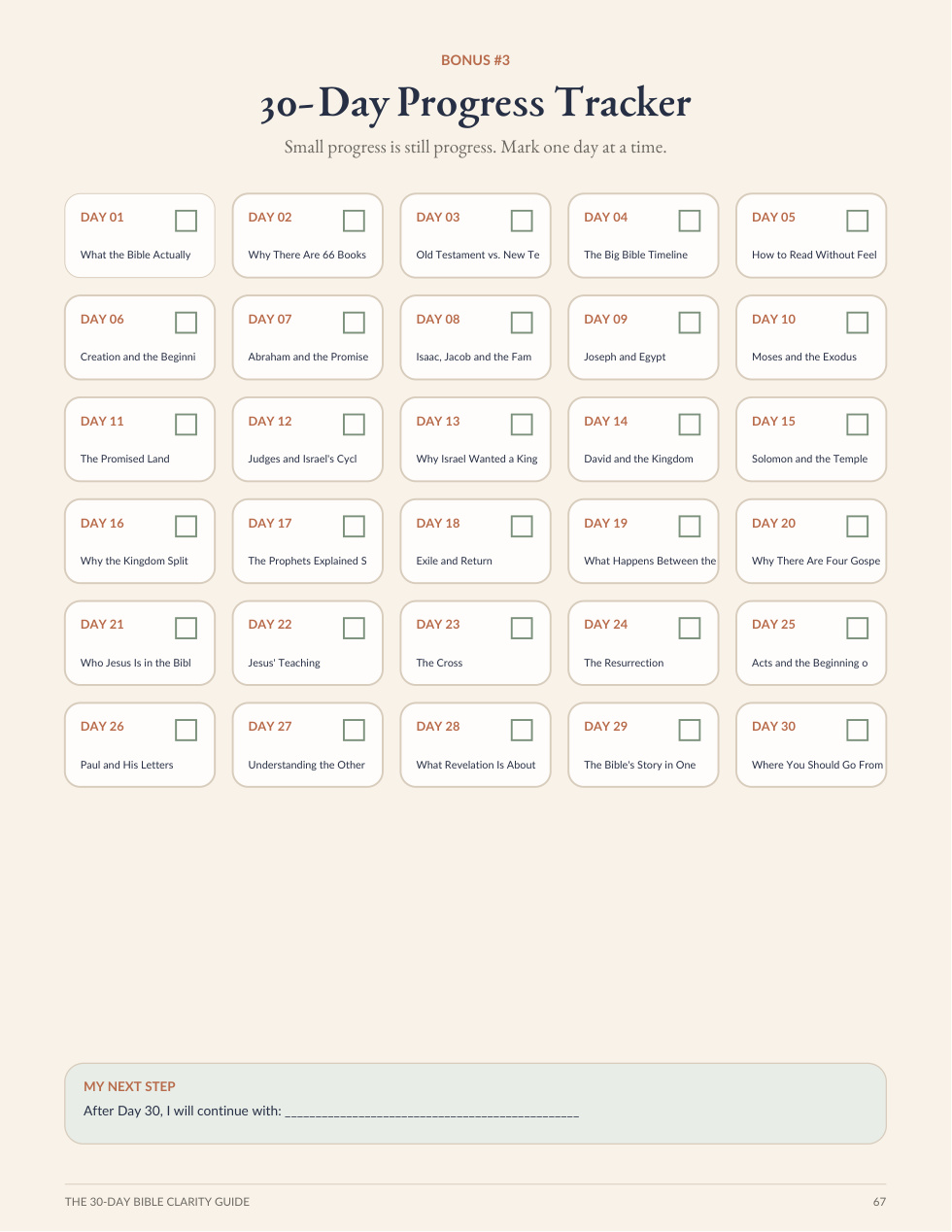
The 69-page illustrated guide, 30 guided days, Bible Timeline, Bible Books Map, 30-Day Progress Tracker, and reusable Bible Notes pages.
The product is covered by a 30-day money-back guarantee through its Gumroad purchase policy.
69 illustrated pages • 30 guided days • Bible Timeline • Books Map • Progress Tracker • Notes Pages